ผีเสื้อ(Lepidoptera)
ผีเสื้อ(Lepidoptera)
- ผีเสื้อ (แมลง) (butterfly), ชื่อแมลงทุกชนิดในอันดับ Lepidoptera มีปีกเป็นแผ่นบางสองคู่ ลำตัว ปีก และขาปกคลุมด้วยเกล็ดขนาดเล็กมากคล้ายฝุ่น เมื่อมองด้วยตาเปล่า เกล็ดเหล่านี้ทำให้เกิดสีต่าง ๆ กัน ปากเป็นงวงยาวม้วนเข้าอยู่ใต้หัวได้ มีทั้งชนิดหากินในเวลากลางวัน เรียก ผีเสื้อกลางวัน, พายัพเรียก กะเบ้อ กำเบ้อ ก่ำเบ้อ หรือ อีเบ้อ, และชนิดหากินในเวลากลางคืน เรียก ผีเสื้อกลางคืน, พายัพเรียก แมงกาย
- ผีเสื้อยักษ์ (แมลง) (moth), ชื่อผีเสื้อขนาดใหญ่หลายชนิด เช่น ชนิด Attacus atlas ในวงศ์ Saturniidae ตัวเมียเมื่อกางปีก วัดจากขอบปีกหนึ่งถึงอีกขอบปีกหนึ่งยาวได้ถึงยี่สิบเอ็ดถึงยี่สิบห้า เซนติเมตร ลำตัวยาวสี่ถึงห้าเซนติเมตร กว้างหนึ่งเซนติเมตรครึ่งถึงสองเซนติเมตร ลำตัวและอกคลุมด้วยขนสีน้ำตาลแดง ปีกสีน้ำตาลแดง มีลวดลาย โดยเฉพาะบริเวณเกือบกึ่งกลางปีกมีลักษณะบางใสรูปคล้ายใบโพ
- วงศ์ปลาผีเสื้อ (butterflyfish), ชื่อปลาทะเลทุกชนิดในวงศ์ Chaetodontidae ยกเว้นปลาโนรี (Heniochus spp.) ลำตัวสั้น กว้าง แบนข้างมาก ปากเล็ก บางชนิดปากยื่นยาวเป็นท่ออยู่ปลายสุดของหัว เกล็ดสากมือคลุมถึงบนครีบหลัง ครีบก้น และครีบหาง สีสวยสด มักเป็นบั้ง แถบ หรือจุดคละกันหลายสี อาศัยอยู่ตามแนวหินปะการัง ขนาดยาวตั้งแต่สิบถึงสามสิบเซนติเมตร
- ผีเสื้อเงิน หรือปลาเฉี่ยวหิน (silver moony), ชื่อปลาทะเลชนิด Monodactylus argenteus ในวงศ์ Monodactylidae ลำตัวสั้นมาก รูปไข่แบนข้าง ครีบหลังและครีบก้นยาวพื้นลำตัวและครีบสีเทาเงิน มีแถบสีดำพาดขวางผ่านตาหนึ่ง แถบและอีกแถบโค้งผ่านแผ่นปิดเหงือกไปยังขอบหน้าของครีบหลังและครีบก้น ขนาดยาวได้ถึงยี่สิบห้าเซนติเมตร อยู่ในน้ำจืดได้, โสร่งแขก ก็เรียก
Pupa
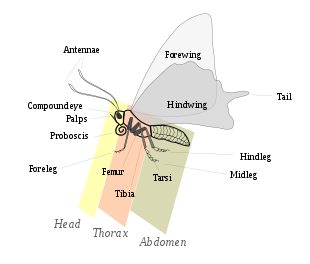
After about 5 to 7 instars,[48]:26–28 or molts, certain hormones, like prothoracicotropic hormone, stimulate the production of ecdysone, which initiates insect molting. Then, the larva puparium, a sclerotized or hardened cuticle of the last larval instar, develops into the pupa. Depending on the species, the pupa may be covered in silk and attached to many different types of debris or may not be covered at all. The pupa stays attached to the leaf by silk spun by the caterpillar before it spins the silk for the full pupa.[22]:566 Features of the imago are externally recognizable in the pupa. All the appendages on the adult head and thorax are found cased inside the cuticle (antennae, mouthparts, etc.), with the wings wrapped around, adjacent to the antennae.[22]:564While encased, some of the lower segments are not fused, and are able to move using small muscles found in between the membrane. Moving may help the pupa, for example, escape the sun, which would otherwise kill it. The pupa of the Mexican jumping bean moth (Cydia deshaisiana) does this. The larvae cut a trapdoor in the bean (species of Sebastiania) and use the bean as a shelter. When there is a sudden rise in temperature, the pupa inside twitches and jerks, pulling on the threads inside. Wiggling may also help to deter parasitoid wasps from laying eggs on the pupa. Other species of moth are able to make clicks to deter predators.[22]:564, 566
The length of time before the pupa ecloses (emerges) varies greatly. The monarch butterfly may stay in its chrysalis for two weeks, while other species may need to stay for more than 10 months in diapause. The adult will emerge from the pupa either by using abdominal hooks or from projections located on the head. The mandibles found in the most primitive moth families are used to escape from their cocoon (e. g., Micropterigoidea).[11][22]:564
เขียนโดย Unknown @ 18:53
0 ความคิดเห็น


0 ความคิดเห็น:
แสดงความคิดเห็น
สมัครสมาชิก ส่งความคิดเห็น [Atom]
<< หน้าแรก